Introduction
With rising fuel costs and increasing pressure to reduce carbon emissions, biomass pellets have emerged as a clean, renewable, and economical alternative to coal and fossil fuels. Governments, industries, and power plants are actively shifting toward biomass-based energy solutions. Setting up a biomass pellet plant not only supports sustainability but also opens strong business opportunities.
This guide walks you through each step involved in setting up a biomass pellet manufacturing plant, from planning to production.
Step 1: Understand Biomass Pellets & Their Demand
Biomass pellets are compressed biofuels made from agricultural residues and organic waste such as rice husk, sawdust, straw, bagasse, and wood chips. They are widely used in:
- Industrial boilers
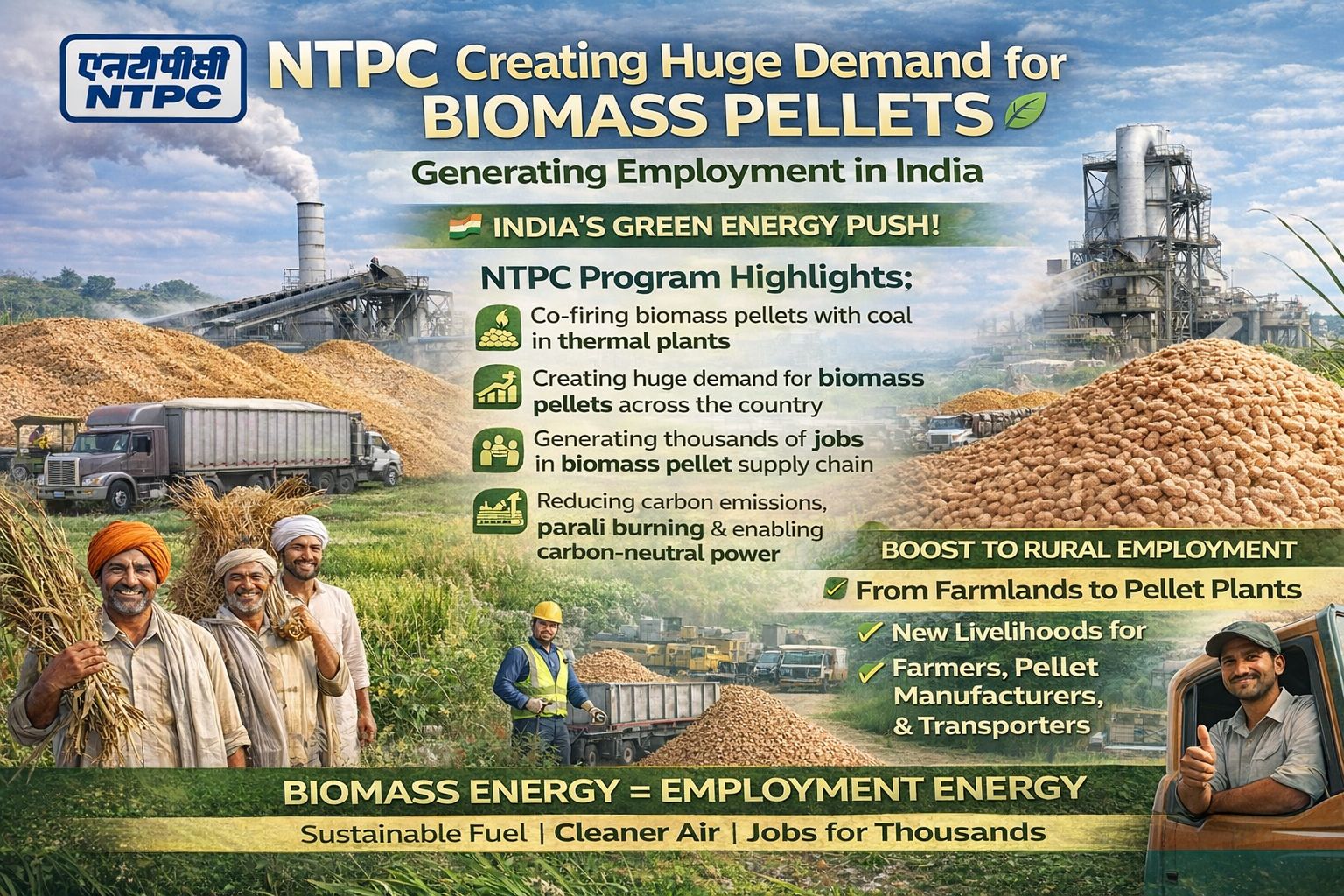
- Thermal power plants
- Brick kilns
- Food processing industries
Growing environmental regulations and coal replacement policies are driving continuous demand for biomass pellets.
Step 2: Selection of Raw Materials
- Choosing the right raw material is critical for pellet quality and profitability.
- Common raw materials include:
- Rice husk
- Wheat straw
- Paddy straw
- Sawdust
- Groundnut shells
- Sugarcane bagasse
- Key parameters to consider:
- Moisture content (ideal: 10–15%)
- Availability throughout the year
- Transportation cost
- Calorific value
Step 3: Plant Capacity Planning
Decide plant capacity based on:
- Market demand
- Raw material availability
- Investment budget
Typical plant capacities:
- Small scale: 1–2 TPH
- Medium scale: 3–5 TPH
- Large scale: 6–10+ TPH
Capacity planning helps in machinery selection and land requirement estimation.
Step 4: Machinery & Equipment Required
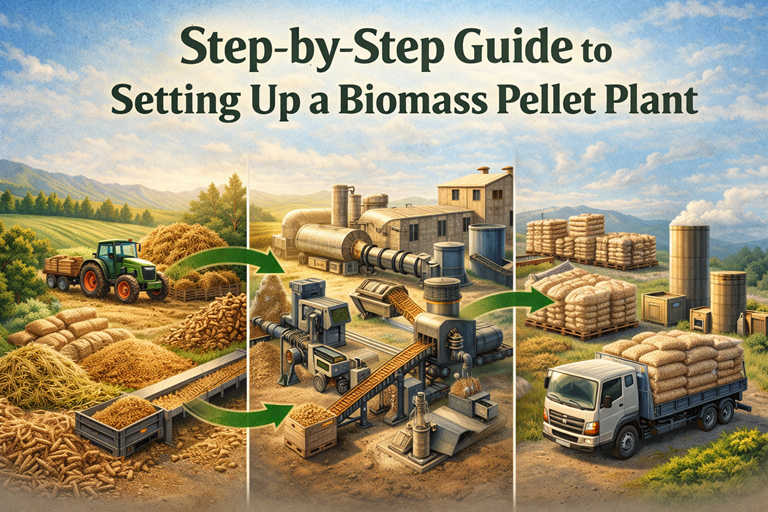
A standard biomass pellet plant consists of the following machinery:
Raw Material Handling System
– Conveyor belts, loaders, storage bunkers
Dryer System
– Rotary dryer or flash dryer to reduce moisture
Grinding Machine
– Hammer mill or crusher for size reduction
Pellet Mill
– Ring die or flat die pellet machine
Cooling System
– Counterflow pellet cooler
Screening & Packing System
– Vibrating screen, bagging machine
Automation can further improve efficiency and reduce manpower costs.
Step 5: Land & Infrastructure Requirement
A biomass pellet plant requires:
- Open area for raw material storage
- Covered shed for machinery
- Power connection (industrial load)
- Water source for cooling & dust control
Approximate land requirement:
- 1–2 TPH plant: 10,000–15,000 sq. ft.
- 5 TPH plant: 25,000–30,000 sq. ft.
Step 6: Power & Utilities
Power consumption depends on plant size and automation level.
- Average consumption: 90–120 units per ton
- Backup power (DG set) recommended
- Dust collection & fire safety systems mandatory
Step 7: Quality Control & Standards
Consistent pellet quality ensures repeat buyers.
Key quality parameters:
- Pellet diameter & length
- Bulk density
- Ash content
- Moisture percentage
- Calorific value
Regular lab testing and proper process control are essential.
Step 8: Cost & Investment Overview
Investment depends on capacity and automation.
Indicative cost range:
- 1 TPH plant: ₹35–50 lakh
- 3–5 TPH plant: ₹1.2–2.5 crore
Operating costs include raw material, labor, electricity, maintenance, and transportation.
Step 9: Marketing & Sales Strategy
Potential customers include:
- Industrial boiler users
- Power plants
- Export traders
- Biomass fuel aggregators
Digital marketing, direct industry tie-ups, and long-term supply contracts help ensure steady revenue.
Step 10: Compliance & Sustainability
Ensure compliance with:
- Pollution control norms
- Fire safety regulations
- Local industrial permissions
Using waste biomass not only reduces pollution but also supports circular economy goals.
Conclusion
Setting up a biomass pellet plant is a future-ready investment combining profitability with environmental responsibility. With proper planning, quality machinery, and reliable raw material sourcing, a pellet plant can deliver consistent returns while contributing to a greener planet.
If executed correctly, biomass pellets truly represent a new hope and a new era of sustainable fuel 🌱🔥